An UNDP survey across five coastal upazilas, including Assasuni and Shyamnagar, reported people drinking unsafe saline water.
GLOW Coastal Resilience
Satkhira · Open for funding
A women-ledresilience systemfor coastalhouseholds.
Women-led groups connect safe water, safer homes, resilient livelihoods and community voice through one accountable local platform.
- Women
- 1,500 Proposed participation
- Groups
- 60 Proposed operating network
- Decision period
- 1 cycle Seasonal evidence and replication decision
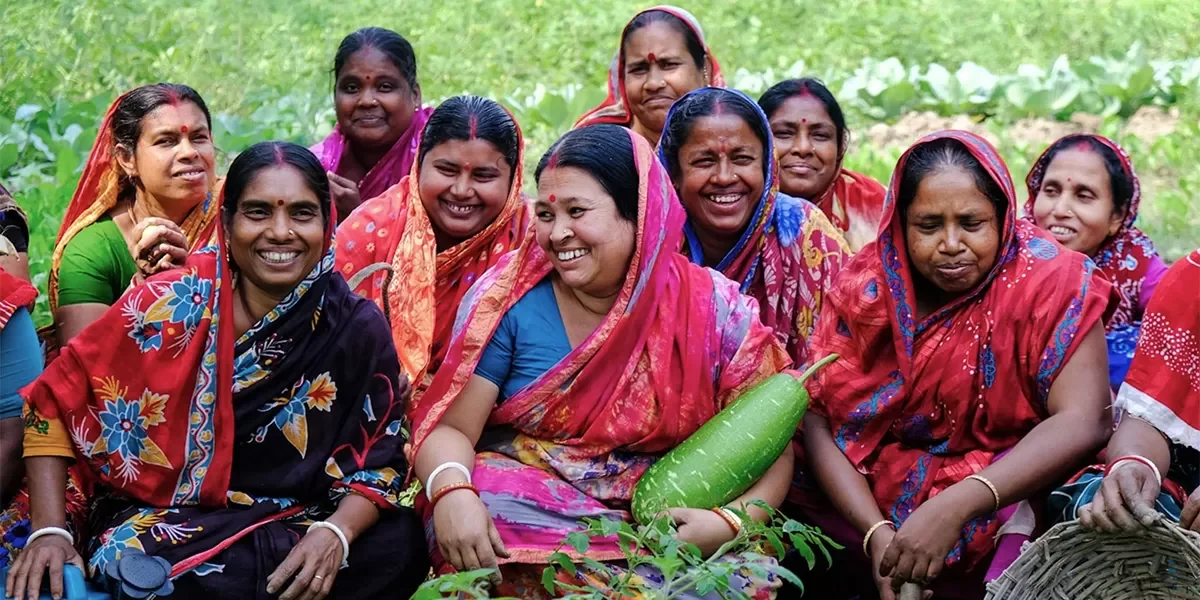
01 · Why Satkhira
In Satkhira, water pressure reaches the whole household.
Salinity, unreliable water access and seasonal waterlogging affect homes, livelihoods, mobility and local decision-making together.
Why the response must be integrated
- Water
- Source reliability, storage and maintenance must be assessed together.
- Home
- Plinth, floor and seasonal access disruption shape household exposure.
- Income
- Livelihood support must account for disruption, recovery and a viable buyer route.
- Voice
- Women need a documented route into local adaptation and budget decisions.
Households in Khulna and Satkhira received 2,000-litre rainwater harvesting systems under the GCA programme.
GLOW tests water, home, income and voice together before fixing the first-cluster asset scope.
02 · Site atlas
Select the geography where household pressure and delivery access overlap.
Read the map as public orientation, then apply the four tests and selection route. No household, community or asset site is selected here.
How to read the atlasContext → screening → field selection
Established district context
Baseline screening
Final site not selected
Four tests govern the first-cluster geography.
- Household pressure
- Water reliability, seasonal access and household exposure.
- Delivery access
- Road, service and maintenance reach through a complete seasonal cycle.
- Local operator
- A credible women-led group base with named governance and records.
- Institutional route
- Working links to union, upazila and relevant technical services.
- 01Map
Identify plausible operating geography.
- 02Baseline
Verify household and service conditions.
- 03Select
Confirm community and operator.
- 04Cost
Finalise the first-cluster scope.
Selection ruleThe first cluster advances when household pressure, access, operator readiness and the costed delivery route are confirmed in the same geography.
DryPre-monsoonMonsoonPost-monsoon
Boundary orientation is informed by the BBS Small Area Atlas and OCHA COD-AB standard. LGED GIS and field verification must confirm roads, facilities and final coordinates. Coastal planning context follows the World Bank CEIP approach linking polders, tidal flooding, storm surge and saline intrusion.
03 · Operating model
One women-led platform supports four connected resilience lines.
Organisation keeps asset selection, maintenance, household records and local accountability connected.
Operating platform
Organise
Women-led groups establish governance, savings practices, records, asset responsibility and local accountability before infrastructure is distributed.
- Proposed network
- 60 groups
- Release evidence
- Group register, leadership roles, savings rules and meeting record
Safe water
Transparent siting, household access rules, named maintenance roles and usable service records.
Outcome · Maintained serviceSafer homes
Raised plinths and household adaptation selected through clear exposure and vulnerability criteria.
Outcome · Reduced exposureResilient livelihoods
Adapted production, livestock and organic inputs linked to technical support and viable markets.
Outcome · Diversified incomeCommunity voice
Risk maps, group records and dialogue forums create a route into local decisions.
Outcome · Public accountability04 · Field context
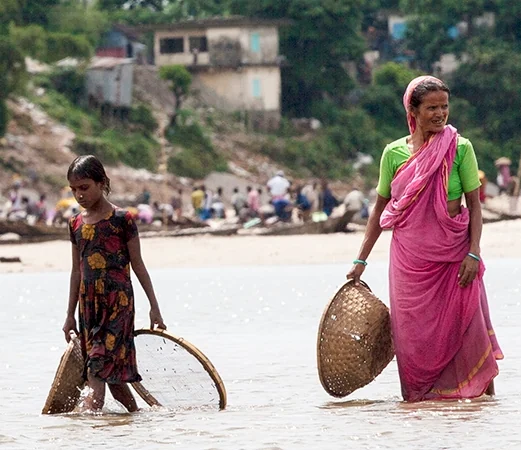
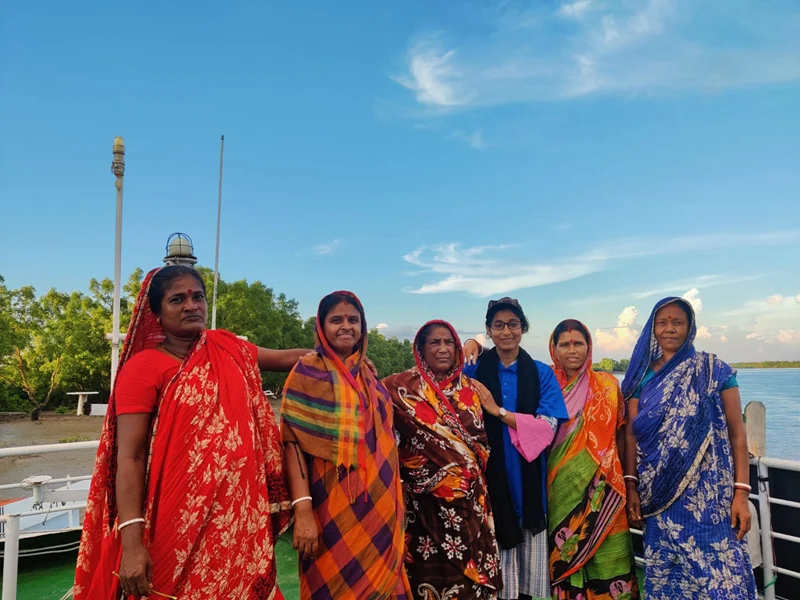
Daily routines and local institutions must shape the operating model.
Representative views keep the design grounded in household settings, movement and collective organisation.
Field verification priorities
- Household water routinesObserve collection, storage, treatment and maintenance conditions before fixing the service design.
- Seasonal movementConfirm how disruption changes access to homes, markets and public services across one complete cycle.
- Group practiceTest meeting, record-keeping and local decision routes with the women-led operating groups.
05 · Initial scope
Define one bounded first investment.
Targets are separated from candidate geography and technical quantities that still require assessment.
| Component | Proposed scope | Readiness |
|---|---|---|
| Women-led groups | 60 groups | Confirm after community selection |
| Participating women | 1,500 women | Proposed target |
| Safe-water systems | 60 systems | Technical assessment required |
| Raised homesteads | 150 plinths | Household baseline dependent |
| Candidate community set | 30 communities | Pipeline for site selection |
| Operating period | One complete seasonal cycle | Established decision period |
| Programme horizon | 3 years | Planning horizon, not first decision period |
The final geography and quantities release only after the baseline and technical assessment.
06 · Readiness and release
Observe one complete seasonal cycle before fixing the final scope.
The baseline follows changing water, access and livelihood conditions instead of treating one visit as a complete household record.
- 01Dry seasonWater baseline
Observe salinity and water-source reliability.
- 02Pre-monsoonTechnical design
Test storage, maintenance and service access.
- 03MonsoonSelection criteria
Record waterlogging and household disruption.
- 04Post-monsoonFinal cluster scope
Assess repair, recovery and income effects.
Visible readiness register
Critical release conditions remain visible.
- District and community selection
- Confirm before release
- Household and participant baseline
- Baseline required
- Women-led operator arrangements
- Confirm before release
- Water-system design and maintenance
- Confirm before release
- Homestead selection criteria
- Confirm before release
- Livelihood and market pathway
- Confirm before release
- Final capital and operating cost
- Finalise after assessment
Capital release ruleCapital releases when the community, operator, participant baseline, technical scope and costed delivery plan are confirmed together.
07 · What the partner funds
Fund preparation, accountable assets and one complete operating cycle.
The first phase combines the work required to define the cluster with the systems required to operate and evaluate it.
Cluster preparation
Community selection, consented household baseline and technical assessment.
Women-led organisation
Group formation, governance, savings practices and delivery records.
Safe-water systems
Technical design, installation, user arrangements and maintenance systems.
Household adaptation
Raised homesteads and documented selection, completion and ownership.
Resilient livelihoods
Household plans, technical support, inputs and market pathways.
Operation and evidence
Service records, seasonal monitoring, public dialogue and replication assessment.
08 · First-phase outputs
The partner receives an operating model and a replication decision.
The first phase is designed to leave behind accountable systems, documented assets and a decision-ready evidence base.
- 01A confirmed operating geography
Selected communities and a documented participant catchment.
- 02A functioning women-led operator network
Governance, savings, records and delivery responsibilities.
- 03Installed and documented resilience assets
Water and household-adaptation assets with clear ownership.
- 04Maintenance and service accountability
Named roles, user arrangements and operating records.
- 05Household, water and livelihood evidence
Performance records across one complete seasonal cycle.
- 06A replication decision
Scale, redesign or conclude using recorded results.
Fund one first cluster. Decide on replication after one complete seasonal cycle.
The partner funds verification, release and one accountable period of operation.
- 01Verify
Confirm the community, operator, participant demand and technical scope.
- 02Release
Approve the costed delivery plan.
- 03Operate
Run the project through one complete seasonal cycle.
- 04Decide
Replicate, redesign or conclude using recorded results.
The first phase converts an integrated resilience concept into an operating, costed and evidence-backed model.
Discuss the programmeCluster conditions unresolved · Current decision
Verify one coastal cluster before releasing the first cycle.
Confirm the geography, operator roles, participant demand and baseline, then structure one accountable seasonal cycle.