Flowers moving in a representative market context
Investment roadmapGadkhali–Jhikargachha · Jashore

Measure the hours from harvest to buyer acceptance. Invest only where control preserves commercial value.

Immediate mandate
Run repeated corridor tests. Issue one decision: invest, pilot or do not build.Open the Flower Clock
Six stages · harvest to buyer acceptance ↓
Reported sector estimates

Coverage and definitions vary. External context, not a FRiO baseline.

≈650 harecently reported core-cluster flower cultivation
≈Tk 400 crreported annual flower economy
Before dawn → ≈9amreported peak-season wholesale window
National reachflowers move from the corridor to markets across Bangladesh
The investment question

Gadkhali has production scale and national reach. FRiO asks which post-harvest controls can improve acceptance, reduce avoidable loss and strengthen route economics.

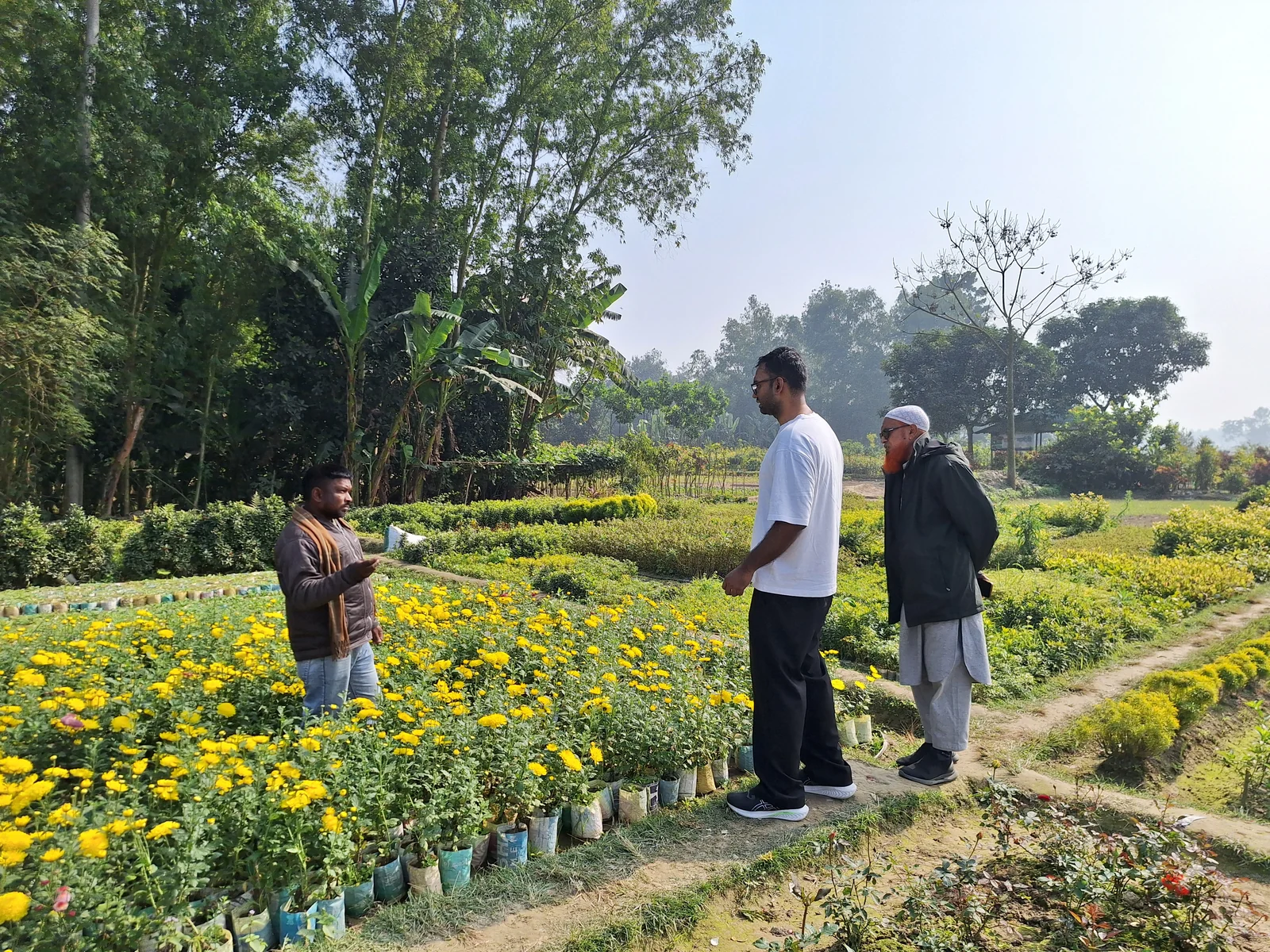
Field visitors discussing an organised flower nursery in Bogra, Bangladesh
Representative floriculture field contextUseful for framing handling questions; Gadkhali timing and route conditions still require corridor verification.
01 · Scale

The load exists, but the commercial load must be measured.

Regional estimates establish scale. Equipment must still be sized against species, daily volume, arrivals and seasonal peaks.

02 · Time

Quality exposure begins before the market opens.

Harvest timing, hydration, shade, waiting and transport shape buyer condition.

03 · Value

Compare handling discipline, targeted treatment and controlled movement.

Each response will be tested against the value it preserves.

04 · Existing assets

Audit what already exists before specifying new capital.

Verify the market centre, collection facilities, cold storage, access, operating status and fit for the proposed route.

Interactive investment test

The Flower Clock.

Follow one consignment from harvest to buyer acceptance. Each stage reveals a risk, control, evidence need and investment implication.

Choose a stage below · the active decision panel updates
Reported context

Regional scale and market timing.

Proposed route

Roles, handoffs and candidate treatment points.

Existing assets

Availability, function, access and route fit.

To verify

Load, condition, time, buyer response and cost.

Representative flower harvesting and handling
01/ 06
01 · Harvest window

Start with the flower and its condition.

Species, maturity, field condition and harvest timing define the baseline.

Primary exposure
Over-maturity, field heat, water stress and mixed quality
Control to test
Harvest window, shade, clean cutting and immediate handling
Evidence required
Species, maturity, temperature, stem condition and harvest time
Investment implication
Shows whether later treatment solves a measurable problem
Existing asset to auditCutting tools, shade, clean water and field handling practices
Commercial decisionDefine the acceptable starting condition.

Stage 1 of 6: Harvest

Evidence programme

Measure one corridor. Compare only what the clock can prove.

Repeated loads join route exposure, treatment, buyer acceptance and accepted-stem economics in one record.
01Gadkhali farmsHarvest02AggregationLoad formation03Treatment pointProportionate control04DispatchNamed buyer window05BuyerAcceptance closes the clock
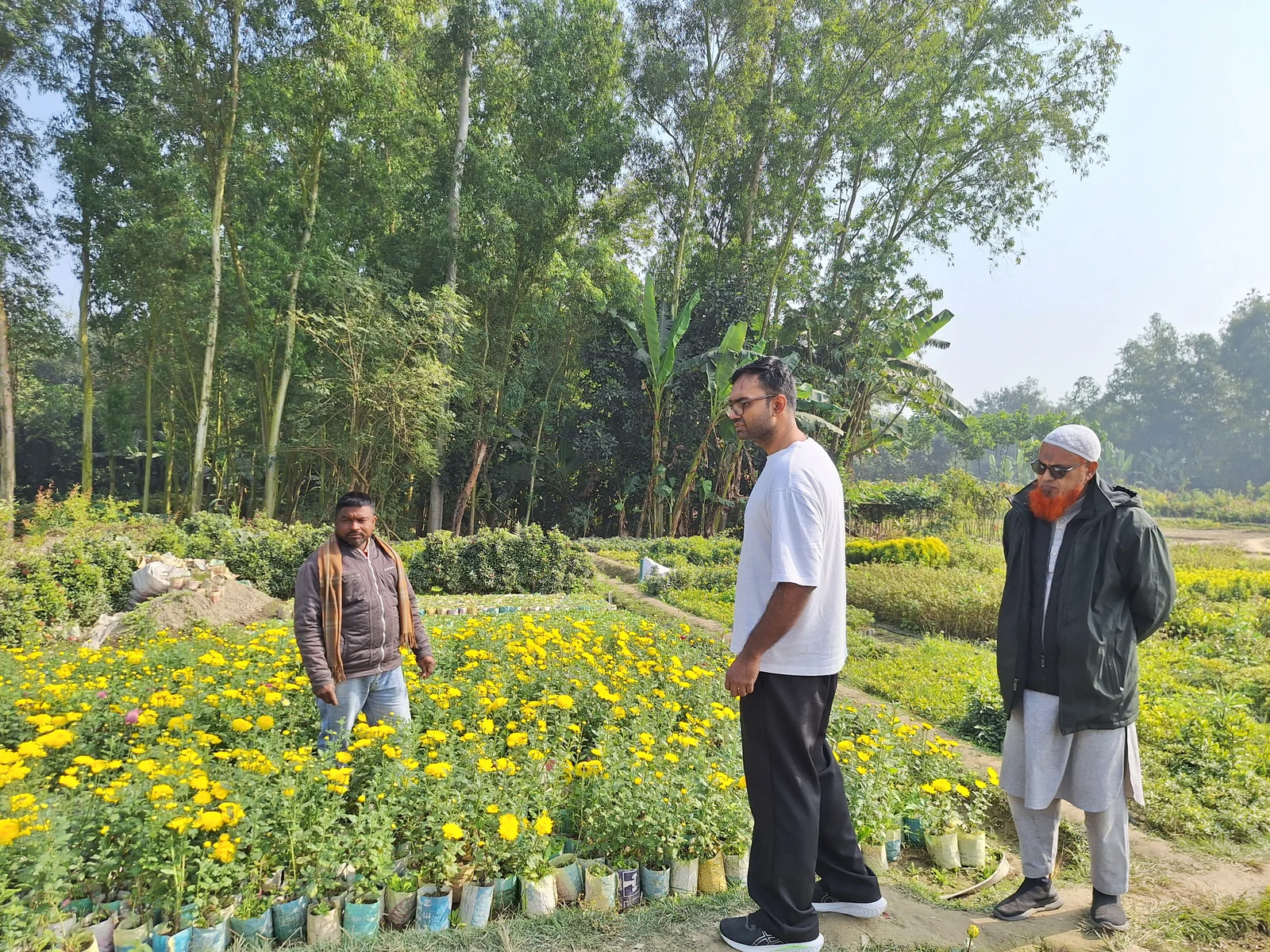
Field team members discussing nursery operations among flowering plants in Bogra
Human checkpointProducers, handlers, operators and buyers agree who records each handoff before testing begins.
Repeated test design
Product and market mix

At least two flower types across peak and lower-demand periods.

Load and route states

Small, typical and peak loads through documented handoffs.

Current and treated routes

Ambient practice, handling-first control and active treatment.

Buyer closure

Repeatable acceptance, rejection, price and settlement records.

Field heat and water stressInconsistent gradingCompression and handlingUnplanned waitingUncontrolled movementBuyer deductions without a shared record
One joined datasetTime × condition × treatment × commercial result
01Starting load

Species, maturity, quantity, harvest time and condition.

02Handling and treatment

Shade, hydration, grading, packing, method, duration and energy.

03Holding and movement

Dwell, environment, loading, journey time and exposure.

04Buyer and economics

Acceptance, rejection reason, price and cost per accepted stem.

Compare before committing

One baseline. Three proportionate responses.

Each response is judged against the current route using the same condition, acceptance and lifecycle-cost record.

Baseline · Current practice

Measure the route as it operates today.

Record waiting, handling, condition, acceptance, price, settlement and cost without a FRiO intervention.

A · Handling-led route

Coordinate before cooling.

Improve shade, hydration, grading, packing and dispatch.

Advance when
Time and handling explain most avoidable loss and acceptance improves against baseline.
Operating test
Can low-capital discipline remain consistent across actors and loads?
B · Treatment-node route

Control where loads converge.

Add flower-specific stabilisation with an accountable operator.

Advance when
Repeatable loads converge and the quality benefit exceeds energy, labour and holding cost.
Operating test
Can protocols, throughput and maintenance create value per accepted stem?
C · Controlled corridor

Extend control to buyer acceptance.

Connect treatment, short holding and controlled dispatch to buyer requirements.

Advance when
Acceptance, price or avoided rejection justifies end-to-end lifecycle cost.
Operating test
Does buyer commitment and multi-actor discipline outperform simpler responses?
Investment gates

Four gates before a response advances.

Definitions and weights are fixed before scoring, then sensitivity-tested.

GateProceed whenPrimary record
Useful load

Volume, seasonality and buyer windows support repeatable service.

Arrival and buyer record
Preserved value

Condition, acceptance, price or avoided rejection improves materially.

Treatment comparison
Viable operation

Roles, maintenance, energy, fees and buyer commitment are credible.

Operating model
Proportionate lifecycle cost

Producer and route value justify total cost against simpler responses.

Options appraisal

Decision record: publish scores, weighting and sensitivity behind the invest, pilot or no-build recommendation.

Funding boundary

Fund the evidence programme first. Release infrastructure only when the Flower Clock identifies an investable control.

Commission repeated corridor tests and one documented recommendation.

  1. 01MeasureRoute, condition and buyer result
  2. 02CompareCurrent route and three responses
  3. 03MandateInvest, pilot or do not build
Approve now
  • Repeated corridor testing and baseline measurement
  • Handling configurations and buyer-response tracking
  • Existing-asset audit and preliminary unit economics
Hold until verified
  • Major construction and equipment specification
  • Permanent facility commitment and multi-route expansion
  • Scale claims unsupported by repeated commercial evidence

Evidence notes

Reported sector estimates: Recent reporting varies by year, geography and definition. FRiO therefore presents the cultivation and trade figures as contextual estimates, not an audited baseline.

Market timing: 2025 reporting describes growers arriving before dawn and wholesale trading concentrated in the early morning, with activity reported through around 9:00 am.

Existing assets: Government and sector records refer to a Godkhali Flower Market Centre Complex, collection infrastructure and cold-storage capacity. FRiO will verify whether each asset is available, functional, accessible and fit for the proposed route.

Technical precedent: A 2025 open-access BAU trial reported a two-ton hybrid horticultural cooler operating near 10.2°C and averaging about 6.79 kWh per day during the trial. It tested fruits and vegetables, required further financial analysis, and does not provide FRiO design assumptions.

Flower-chain science: Wageningen research supports temperature as a major quality variable while showing that species and handling change the effect.

Timing value unresolved · Current decision

Test the Flower Clock before choosing capital.

Commission repeated corridor tests, buyer-response tracking and an equal appraisal of handling and cooling options.